~ by Rob Tucci, Ontario Sales Representative
For decades, one question dominated book manufacturing conversations: “How many books can we print at the lowest possible unit cost?”
It was a reasonable approach…larger print runs typically delivered lower per-book costs, making it tempting to maximize quantities whenever possible. However, today’s publishing environment looks very different.
Demand is less predictable, market trends move faster, warehouse space is expensive, cash flow matters. Publishers are under increasing pressure to balance availability with risk.
As a result, many publishers are now asking a different question: “What is the smartest amount of inventory to carry?”
The answer involves weighing not only unit cost, but also cash investment, storage costs, obsolescence risk, and the ability to replenish inventory quickly.
THE HIDDEN COST OF “CHEAP” BOOKS
On paper, larger print runs often look attractive. Let’s say printing 10,000 copies reduces the unit cost compared to 3,000 copies. The savings can appear significant on a spreadsheet. But manufacturing cost is only one piece of the equation.
Large print runs also create:
- Higher upfront cash requirements
- Increased warehouse expenses
- Greater inventory management costs
- More risk if demand changes unexpectedly
- Potential write-offs for unsold stock
In other words, the cheapest book to print isn’t always the most economical book to own. Many publishers are discovering that inventory sitting in a warehouse represents tied-up capital that could be invested elsewhere.
INVENTORY RISK IS INCREASING
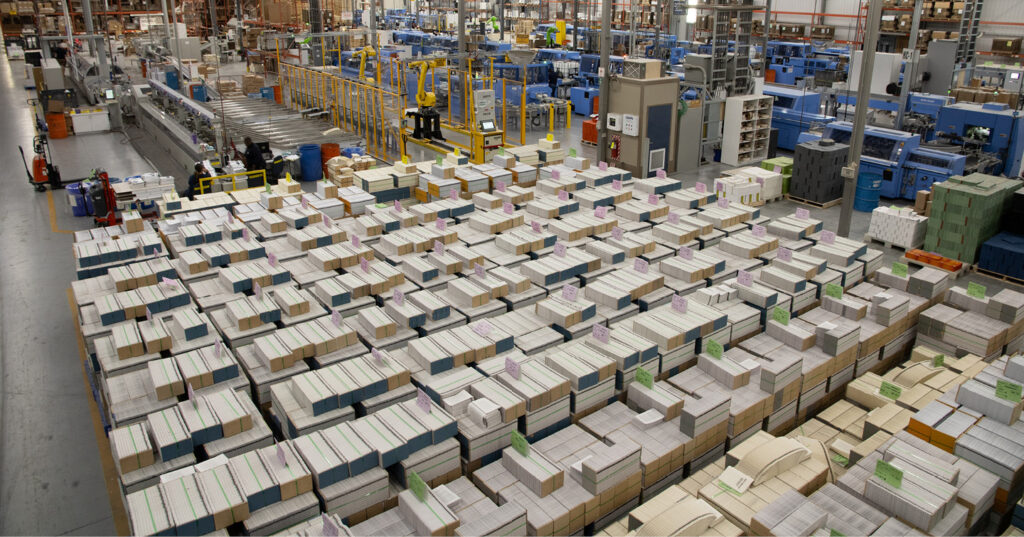
Publishing has always involved forecasting demand, but forecasting has become more challenging. Consumer interests shift quickly. Educational content changes. Niche markets fluctuate. Sales channels are more fragmented than ever. A title that looked like a sure thing six months ago may experience slower-than-expected sales once it reaches the market. On the other hand, a surprise bestseller can sell through inventory much faster than anticipated.
Both scenarios create challenges:
- Too many books and capital becomes trapped in inventory.
- Too few books and sales opportunities can be missed.
This is why flexibility has become just as valuable as volume.
THE RISE OF THE REPLENISHMENT MINDSET
Rather than treating inventory as a one-time decision, many publishers are moving toward an ongoing replenishment strategy. Instead of printing an entire year’s supply at once, they are printing quantities that support current demand and replenishing stock as needed.
This approach allows publishers to:
- Reduce inventory carrying costs
- Improve cash flow
- Respond more quickly to market demand
- Make updates or corrections sooner
- Reduce the risk of extra inventory
The goal isn’t necessarily to print fewer books overall. It’s to produce inventory in a way that better aligns with actual sales patterns.

WHERE INKJET PRINTING FITS IN
This shift in thinking is one reason inkjet printing has become increasingly valuable for publishers.
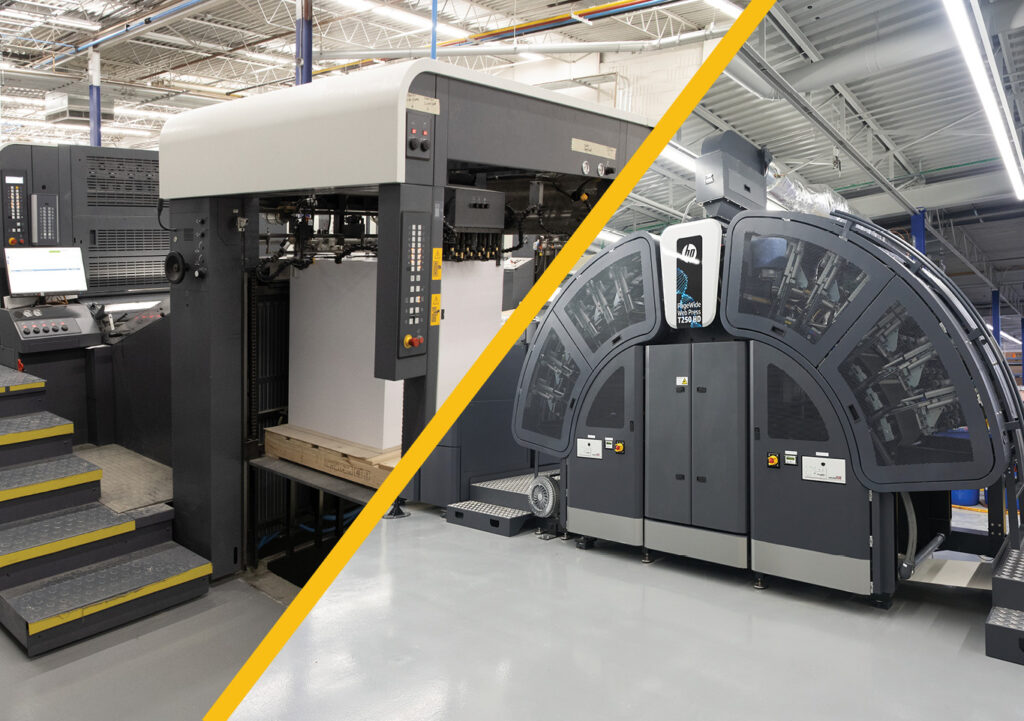
Traditional offset printing remains highly economical for larger quantities because setup costs are spread across more books. As quantities grow, the per-unit cost continues to decrease. But when inventory flexibility becomes the priority, inkjet offers a different advantage.
High-speed inkjet presses excel at short to medium print runs, making them well suited for reprints, backlist titles, seasonal books, educational materials, and inventory replenishment projects. Instead of waiting until stock levels become critically low, publishers can print smaller quantities more frequently and remain responsive to demand.
Inkjet quality has also advanced significantly in recent years. Improvements in printheads, inks, colour management, and paper compatibility now produce sharper text, smoother colour, finer detail, and more consistent results. While inkjet was once associated mainly with black-and-white text, it is now a strong option for many full-colour books, including titles with photographs and illustrations.
This allows inventory decisions to be driven by real-world sales data rather than long-term forecasting assumptions.
A HYBRID STRATEGY IS BECOMING MORE COMMON
For many publishers, the answer isn’t choosing between offset and inkjet. It’s using both. A growing number of publishers are adopting a hybrid production model:
- Offset for the initial launch quantity
- Inkjet for ongoing replenishment
This approach takes advantage of offset’s strong economics on larger runs while reducing the inventory risk associated with carrying thousands of extra copies in storage. A similar hybrid model has been highlighted as a way to balance cost efficiency and inventory risk.
The result is a more agile supply chain that can adapt as demand evolves.
BACKLIST TITLES THAT BENEFIT THE MOST
Backlist publishing may be where this inventory strategy delivers the greatest value. Many publishers have hundreds or even thousands of titles that continue to sell steadily but not in large quantities. Historically, keeping these titles available often meant carrying significant inventory or accepting periods of stockouts.
Inkjet printing changes that equation by enabling shorter, cost-effective runs that keep inventory levels lean while maintaining availability. This flexibility has been identified as particularly valuable for backlist management.
Instead of warehousing years’ worth of inventory, publishers can replenish titles when demand warrants it.
INVENTORY IS NO LONGER JUST A MANUFACTURING DECISION
Today’s publishing economics require a broader perspective. The conversation has shifted beyond print cost alone. Publishers are increasingly evaluating:
- Unit cost
- Cash flow
- Warehouse expenses
- Inventory turns
- Forecast accuracy
- Replenishment speed
- Supply chain flexibility
In that environment, the lowest print cost doesn’t always lead to the best business outcome.
THE NEW GOAL: BALANCE
Successful inventory strategies aren’t about printing the most books or the fewest books…they’re about finding the right balance.
The most effective publishers are building manufacturing plans that align production with demand, reduce unnecessary inventory risk, and preserve the flexibility to respond when markets change.
And as replenishment-focused strategies become more common, technologies like high-speed inkjet are helping make that balance easier to achieve than ever before.

Rob Tucci works with publishers across Ontario, helping them navigate project decisions and find the best path forward for their books. He is known for providing professional advice, communicating clearly, and quickly sorting through project details to keep things moving efficiently. Outside of work, Rob enjoys bike riding, cooking, and spending time with his family.